I’m not an attorney, but I can certainly read and reason about law — and so can you!
Recently, the Board made you aware of it’s “victory” in court by having our roads declared to not be our roads, but rather that they are now declared to be property of the Town of Edgewood. Although, at first this appeared to be a hollow victory as the judgment also requires that SAEPOA maintain the roads (and thus saves us no money), there is a silver lining to the judgment. Namely, that it completely puts to an end the debate over the legality of our 501(c)(3) tax exempt status with the IRS, and thus we should have our Board bring to an immediate end the lawsuit for dissolution (the Ponto et. al. lawsuit), which is based on the clearly disputable argument that we are not properly established as a 501(c)(3) organization.
This is how our situation has changed:
- The roads that we previously considered as property of the Association have now been adjudicated as public, and to have been so throughout the life of the Association.
- Our 501(c)(3) status is based upon paragraphs in both the Restrictive Covenants and Bylaws that state that we are to be operated “exclusively for charitable, religious, education, and scientific purposes, including for such purposes, the making of distributions to organizations that qualify as exempt organizations under section 501(c)(3).”
- Our founding documents also describe the requirement to maintain the roads.
- Our current Board has argued that these two are in conflict with each other (i.e., we can’t do charity because we need to do HOA work, and we can’t do HOA work because we are a charity).
- The Board also claims that we cannot do any HOA work (maintain roads) because it does not qualify as “charitable and public benefit”. We had debated this point before.
- HOWEVER, now the roads are public. By definition of the Internal Revenue Code, maintaining the roads — that are now public — fits squarely within the black-letter language of the law. The roads are supported as charitable under “erection or maintenance of public buildings, monuments, or works”, as well as “lessening the burdens of government”.
- The specific passage is in Treasury Regulation § 1.501(c)(3)-1(d)(2) and is shown below with the important sections highlighted.
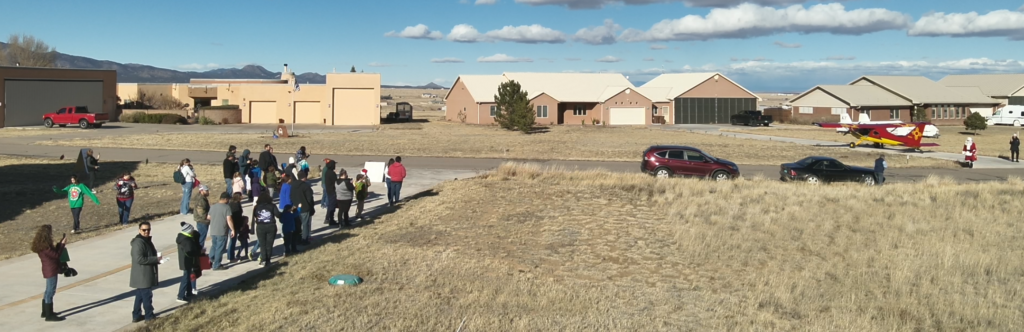
- Thus, Treasury Regulation § 1.501(c)(3)-1(d)(2) makes it clear that maintaining the roads is CHARITABLE work according to the IRS, no different from hosting Young Eagles or putting on a Santa Fly-In, or teaching classes. All of our work is charity!
- The argument over 501(c)(3) status is now moot. There is no credible argument that we do not qualify as an exempt organization.
- Since “charity” includes both the activities we do (such as Santa Fly-In) and the maintenance activities, there is no conflict.
- The judge ruled that SAEPOA be responsible for maintenance of the roads.
- ¶49: “Pursuant to the three Plats, the Association is required to maintain the roads within the Airpark.”
- ¶63-64: The roads are public and owned by the Town; the Association is responsible for maintenance.
- ¶27: No public funds have ever been used to maintain the roads. SAEPOA has been subsidizing Town infrastructure entirely.
- Thus, the Board must restart operations immediately and end this ridiculous embargo of providing services.
- The Ponto (dissolution) lawsuit’s claims were completely eliminated by the recent judgment because the basis of the lawsuit is the claim that the HOA must be dissolved for reasons that are clearly negated according this judgment. Since the roads are public property, there is no legal basis for the Ponto lawsuit.
- Our association attorney should immediately file for the Ponto lawsuit to be dismissed.
- The Ponto plaintiffs could perform a service to their neighbors by simply withdrawing the lawsuit.
We can then get back to operating as an airpark neighborhood.
Here is relevant “black-letter” text of the Internal Revenue Code (Treasury Regulation § 1.501(c)(3)-1(d)(2)):
Charitable defined. The term charitable is used in section 501(c)(3) in its generally accepted legal sense and is, therefore, not to be construed as limited by the separate enumeration in section 501(c)(3) of other tax-exempt purposes which may fall within the broad outlines of charity as developed by judicial decisions. Such term includes: Relief of the poor and distressed or of the underprivileged; advancement of religion; advancement of education or science; erection or maintenance of public buildings, monuments, or works; lessening of the burdens of Government; and promotion of social welfare by organizations designed to accomplish any of the above purposes, or
(i) to lessen neighborhood tensions;
(ii) to eliminate prejudice and discrimination;
(iii) to defend human and civil rights secured by law; or
(iv) to combat community deterioration and juvenile delinquency. The fact that an organization which is organized and operated for the relief of indigent persons may receive voluntary contributions from the persons intended to be relieved will not necessarily prevent such organization from being exempt as an organization organized and operated exclusively for charitable purposes. The fact that an organization, in carrying out its primary purpose, advocates social or civic changes or presents opinion on controversial issues with the intention of molding public opinion or creating public sentiment to an acceptance of its views does not preclude such organization from qualifying under section 501(c)(3) so long as it is not an action organization of any one of the types described in paragraph (c)(3) of this section.
Leave a Reply